QR code reader
Upload a QR code image and extract the data out of it.
QR code reader is a free tool that extracts the data embedded in a QR code image.
Private, browser-based image processing
The reader processes the QR code image entirely in your browser. Your QR code screenshot, photo, or other selected image is never uploaded to a server.
This matters when a code contains private information such as Wi-Fi credentials, an appointment link, an internal inventory number, or contact details. The decoded content still appears on your screen, so avoid sharing the result or leaving it visible on a shared device if the payload is sensitive.
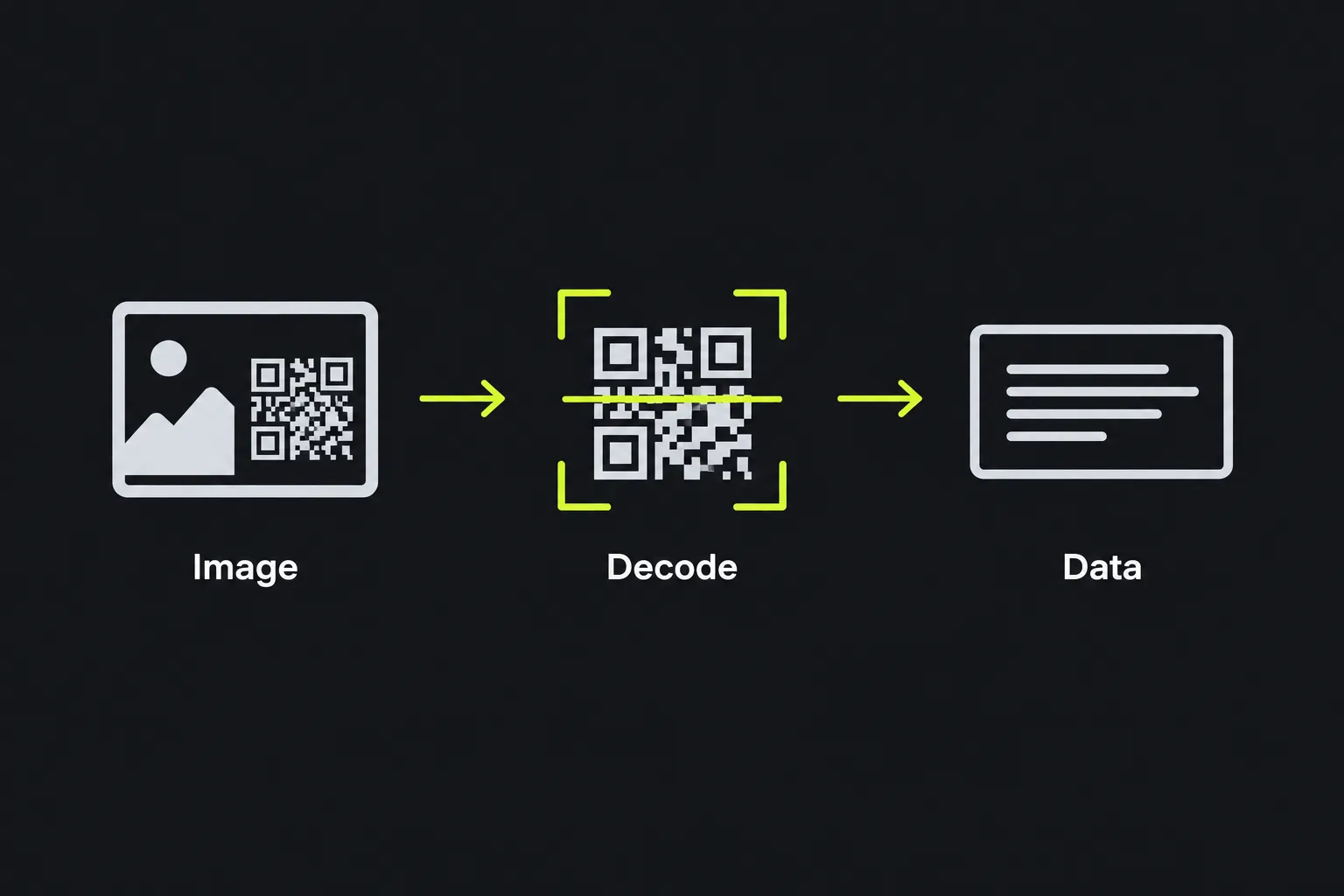
Using the reader on a computer or phone
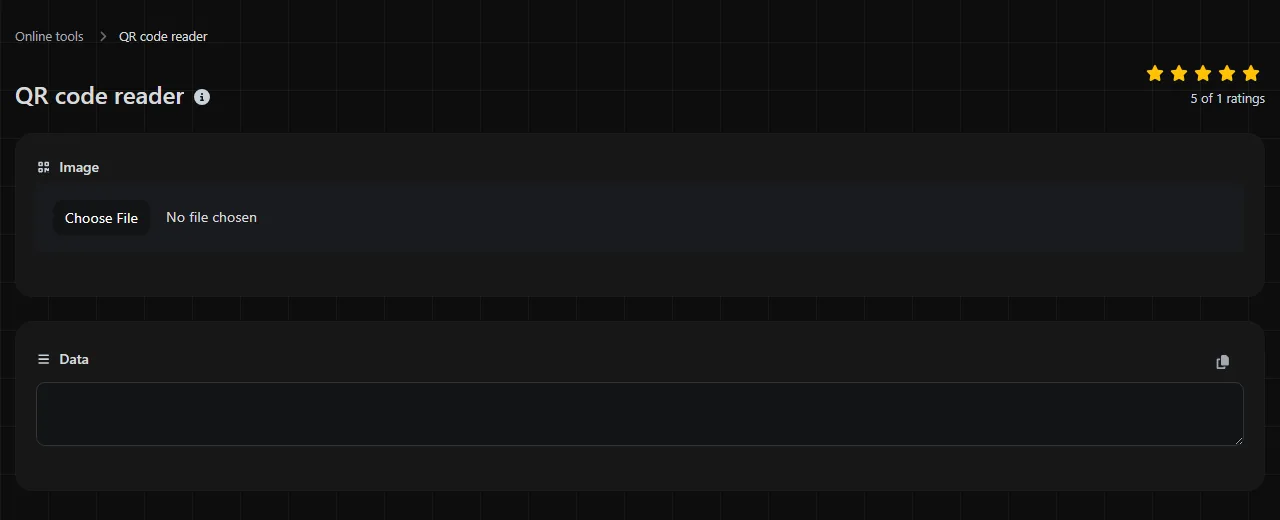
Select an image in the QR code image field, then review the extracted content in Data. The documented input is an existing image, so save or capture the QR code before selecting it.
- On a desktop or laptop, save the QR code image or take a screenshot of the area containing it.
- On a phone, take a screenshot or photo of the QR code, then choose that image from the device's file or photo picker.
- If the code occupies only a small part of the picture, crop around it while leaving the complete square and some blank space around the edges.
- Read the result before opening a URL, joining a network, or copying credentials elsewhere.
A screenshot is usually preferable when the QR code already appears on a screen because it avoids camera shake, glare, and perspective distortion. For printed QR codes, hold the camera parallel to the surface and make sure all four sides are visible.
What does the Data result mean?
The Data result is the payload stored in the QR code. A QR code can hold a URL, plain text, numbers, contact-card data, Wi-Fi configuration, an email instruction, or an application-specific identifier.
For example, a venue check-in code might decode to https://example.com/visit?location=482. Inspect the domain name and the rest of the address before opening it. A QR code does not prove that a website is legitimate, and a decoded link can lead anywhere.
A Wi-Fi code may produce data similar to WIFI:T:WPA;S:Guest-2F;P:Maple739;;. In this common format, S identifies the network name, T identifies the security type, and P contains the password. Treat that output as a credential rather than ordinary text.
A contact code commonly contains vCard fields such as BEGIN:VCARD, a name, phone number, and email address. A warehouse label might contain only BX-2048-17. Numbers, spaces, punctuation, and non-Latin characters can all be part of QR data, although correct display of older or unusual character encodings depends on how the original code was created.
The result comes from the QR payload, not from the surrounding picture. Camera model, capture date, GPS coordinates, and similar photo properties are EXIF metadata. Use Exif reader when you need to inspect that information.
Which images give a QR decoder enough information?
Images work best when the entire QR symbol is visible, sharply focused, and clearly separated from its background. A decoder needs the square finder patterns, the grid of light and dark modules, and enough surrounding margin to locate and interpret the symbol.
- Good input includes a direct screenshot, a close photo taken straight on, or a clean crop that retains the complete code.
- Blurry input can merge neighboring modules and change the apparent data pattern.
- Cropped input may remove a finder pattern or the quiet zone around the code.
- Damaged input may still work when QR error correction can recover the missing modules, but recovery is limited and is not guaranteed.
- Glare and shadows can hide modules even when the image otherwise appears sharp.
- Very small codes may not contain enough distinct pixels for each module to be recognized.
Long payloads usually require denser QR symbols. Dense symbols are less forgiving of low resolution, poor focus, screen moiré, and aggressive image compression. If QR decoding fails, retake the photo closer to the code, improve the lighting, or obtain the original image. No QR code reader can reliably reconstruct a code when too much of its pattern is missing.
When should you inspect a QR code instead of scanning it directly?
Inspect the code first when you want to see its destination or contents without immediately acting on them. A phone camera may hand a URL to the browser or offer to join a Wi-Fi network, while extracting the payload lets you examine the text beforehand.
This extra step is useful for codes in unsolicited mail, parking notices, payment requests, restaurant stickers, or messages from unknown senders. Check for misspelled domains, unexpected URL shorteners, unusual login pages, and payment details that do not match the person or organization you expected.
Reading a QR code does not verify the claims printed next to it. A replacement sticker can cover a legitimate code, and familiar logos can be copied. If the payload is a phone number, account identifier, or payment address, compare it with a separate source before using it.
Common questions about reading QR codes
Can I read a QR code from a PDF?
The input field accepts a QR code image, not a PDF document. Take a screenshot of the PDF page or export the relevant page as an image, then crop it so the code remains complete and large enough to read.
Why does a QR code show plain text instead of a clickable link?
A QR code stores data, and that data does not have to be a URL. If the payload lacks a recognized scheme such as https://, an application may treat it as plain text even when it resembles a web address.
Does rotating a QR code change what it contains?
No. Rotation changes the image orientation, not the encoded payload. QR finder patterns are designed to help decoders determine orientation, although severe perspective distortion can still prevent a successful read.
Can decorative or colored QR codes be decoded?
They often can if there is clear contrast and the finder patterns, data modules, and quiet zone remain recognizable. Gradients, low-contrast colors, logos that cover too much of the grid, and busy backgrounds increase the chance of failure.
What should I use for a code made of vertical bars?
A symbol made primarily of parallel vertical bars is likely a one-dimensional barcode rather than a QR code. Use Barcode reader for formats commonly found on retail products, shipping labels, books, and asset tags.
Can error correction fix any damaged QR code?
No. QR error correction can recover a limited amount of missing or incorrect data, depending on the correction level used when the code was created. It cannot compensate for unlimited damage or an image in which individual modules are no longer distinguishable, and a missing corner may prevent decoding.
Similar tools
Popular tools
Create a WhatsApp chat link from a phone number, with an optional prefilled message.