Barcode reader
Upload a barcode image and extract its data.
Barcode reader is a free tool that extracts the data encoded in a barcode image and returns it as readable text.
What do the bars, spaces, and cells encode?
The marks encode data according to the rules of a particular barcode symbology. A one-dimensional barcode uses bars and spaces, while a two-dimensional symbol may use a grid of cells. The data is often an identifier, although some formats can hold longer structured content.
- Retail barcodes: UPC and EAN symbols commonly contain product numbers used to look up an item in a retailer or manufacturer database.
- Inventory and shipping labels: Code 128 and related formats may contain SKUs, order references, serial numbers, or tracking identifiers.
- Web addresses: Two-dimensional formats can encode a complete URL, including its path and query parameters.
- Wi-Fi settings: A QR payload may specify a network name, security type, and password in a structured text format.
- Contact details: A QR code can contain a vCard with a name, phone number, email address, and organization.
A barcode generally contains the identifier itself, not all the information associated with it. For example, a UPC does not normally store a product description, current price, nutrition facts, or inventory level. Another system uses the decoded number to retrieve those details.
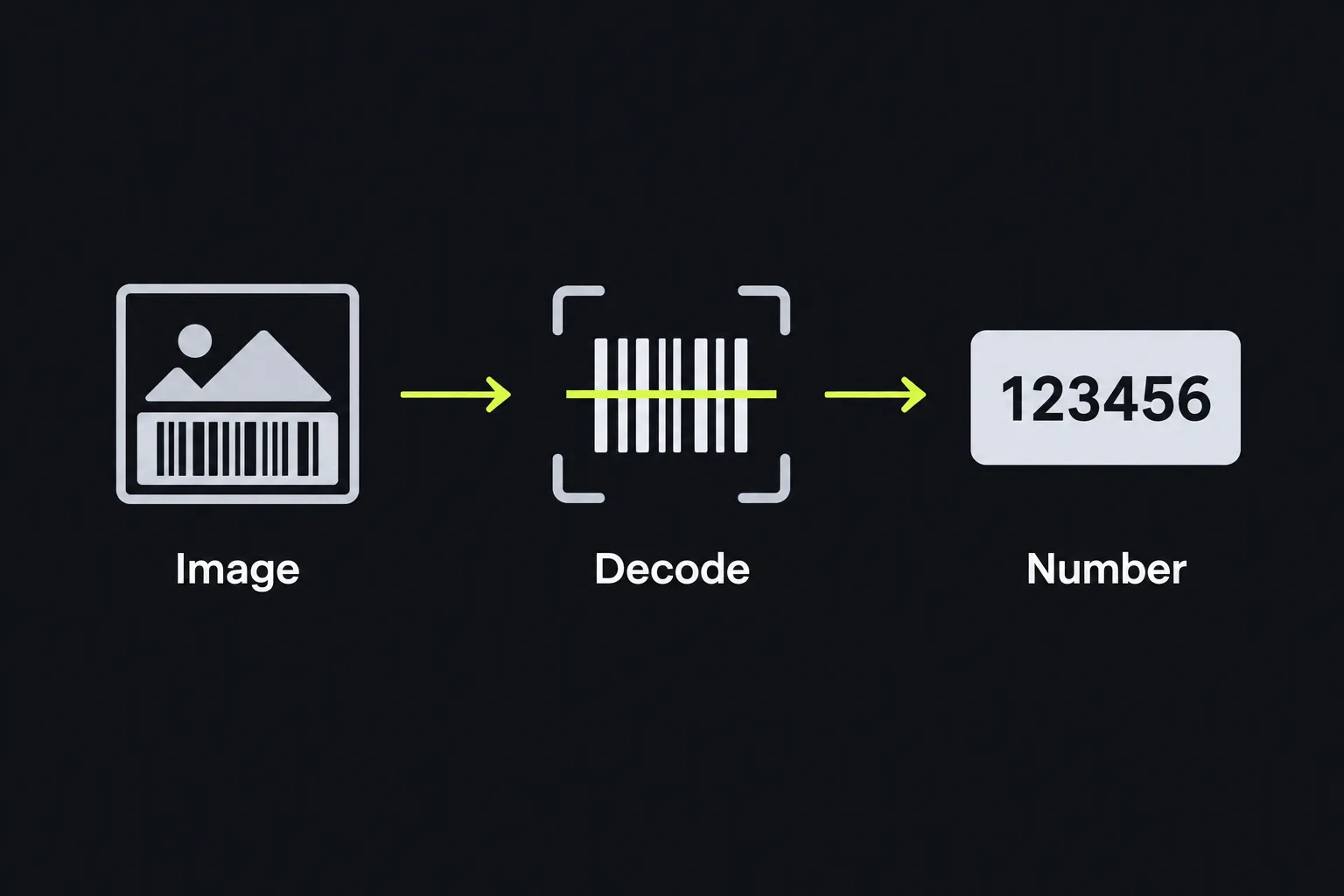
Your image stays in the browser
The barcode image is processed entirely in your browser. The file is never uploaded to a server.
This applies to screenshots and photos selected through the Barcode image field. Local processing is useful when a label contains an internal asset number, shipment reference, or other data that you do not want to send to a remote decoding service. The decoded value remains subject to the security and storage conditions of your own device, browser, and installed extensions.
Desktop and phone workflow
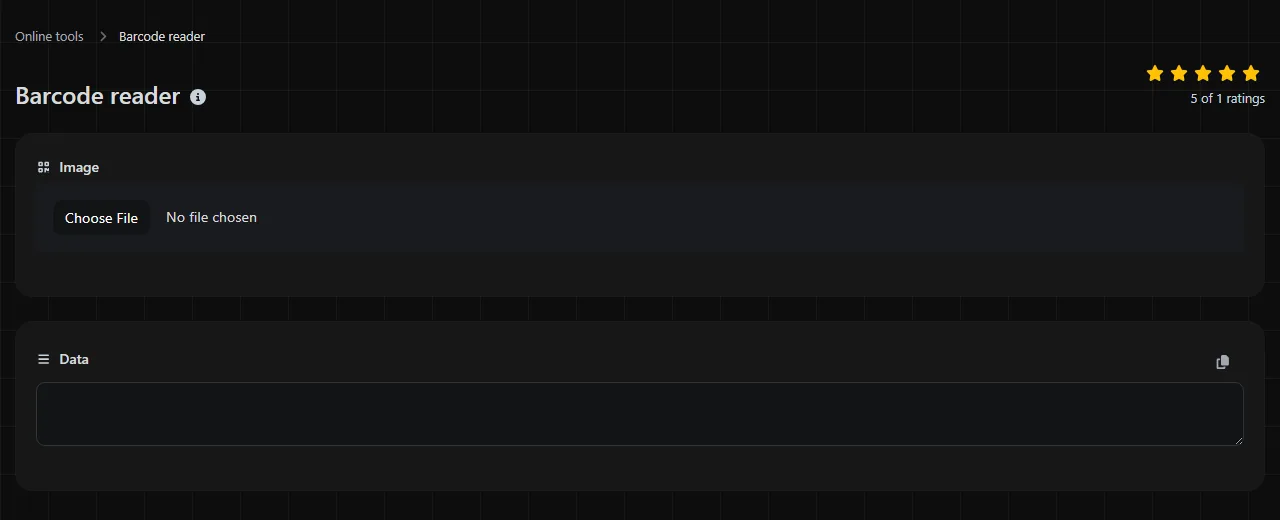
- Save the screenshot or photo as an image file. On a phone, you can take a screenshot of a barcode already displayed on the screen.
- Open the Barcode image field and choose the saved file from your computer or phone.
- Check the Data result after the image has been processed.
- Copy the value only after confirming that it matches the expected type of information.
Use the original image when possible to preserve barcode detail. If the barcode occupies only a small part of a large photo, crop around it while preserving any required quiet zone. Keep the entire symbol visible and avoid placing a crop boundary through the outer bars or cells.
Blurry, cropped, damaged, distorted, or very low-resolution images may fail to decode. Glare from glossy packaging can hide bars, and strong perspective can change their apparent widths. For a new photo, hold the camera parallel to the label, fill more of the frame with the code, and use even lighting.
How should I interpret the Data result?
The Data field contains the barcode payload. Verify any description of the item or destination independently. Its meaning depends on the symbology and the system that created the code.
For example, a barcode encoding the order reference PO-4827/A3 should return PO-4827/A3 when it decodes successfully. A retail symbol might return a numeric value such as 725272730706. That number must be checked against the appropriate product catalog before it becomes useful product information.
A two-dimensional code can return structured text. A Wi-Fi payload may begin with WIFI:, while contact data may begin with BEGIN:VCARD. A web address may appear as a complete value such as https://example.com/returns?id=4827.
Inspect any decoded URL before opening it. A barcode can point to any address its creator chose, including a misleading login page or an unexpected download. Check the domain name, spelling, and URL scheme, and do not enter credentials merely because the link came from printed packaging.
Numbers, spaces, punctuation, accented letters, and non-Latin writing are not handled uniformly by every barcode format. Some one-dimensional symbologies permit only a restricted character set. Two-dimensional formats can carry more varied data, but text encoding differences may still produce unreadable characters in older or incompatible software. Longer payloads also create larger or denser symbols that need more image detail to scan reliably.
Can a photo hold information outside the barcode?
Yes, a photo can contain metadata that is separate from the visible barcode and its decoded payload. Camera images may include EXIF fields such as the capture date, camera model, orientation, exposure settings, and sometimes GPS coordinates.
The Data result is for the content encoded in the barcode. It does not provide a general metadata report for the image. Use Exif reader when you need to inspect camera or location metadata. If the symbol is specifically a QR code with a URL, Wi-Fi configuration, or contact card, QR code reader is the more focused option.
Questions people often ask about barcode images
Does renaming the image file change the decoded value?
No. The file name is not part of the barcode payload, so changing IMG_1042.jpg to shipping-label.jpg does not alter the encoded data. Editing, resizing, or recompressing the image can affect readability if it removes visual detail.
Can I use a barcode that is inside a PDF?
The input field accepts a barcode image, so first export the relevant PDF page as an image or take a clear screenshot. Crop the screenshot around the code without cutting off its surrounding blank area. Password protection or PDF permission settings may restrict opening or exporting the page.
Can a check digit repair a damaged barcode?
No. A check digit helps a decoder detect many reading errors, but it does not reconstruct bars or cells that are missing from the image. If the printed number is visible below a damaged retail barcode, you may be able to enter that number manually in the system where it belongs.
Will rotating the photo change the stored data?
Rotation does not change what the barcode encodes. However, image orientation, perspective, and resampling can affect whether software recognizes the symbol. If a rotated copy fails, return to the original photo and rotate it in 90-degree steps without repeated resizing.
Should I keep the barcode image after decoding it?
Keep it only if you still need the label or an audit record. A saved image may expose order numbers, ticket identifiers, account references, or location metadata to anyone with access to the device. After verifying the result, delete unnecessary screenshots from the regular photo library and any deleted-items folder.
Similar tools
Popular tools
Create a WhatsApp chat link from a phone number, with an optional prefilled message.