UTM link generator
Add valid UTM parameters to generate a trackable link.
UTM link generator is a free tool that adds campaign tracking parameters to a destination URL and produces a link you can use in ads, email, social posts, and other promotions.
How does campaign tagging work in a URL?
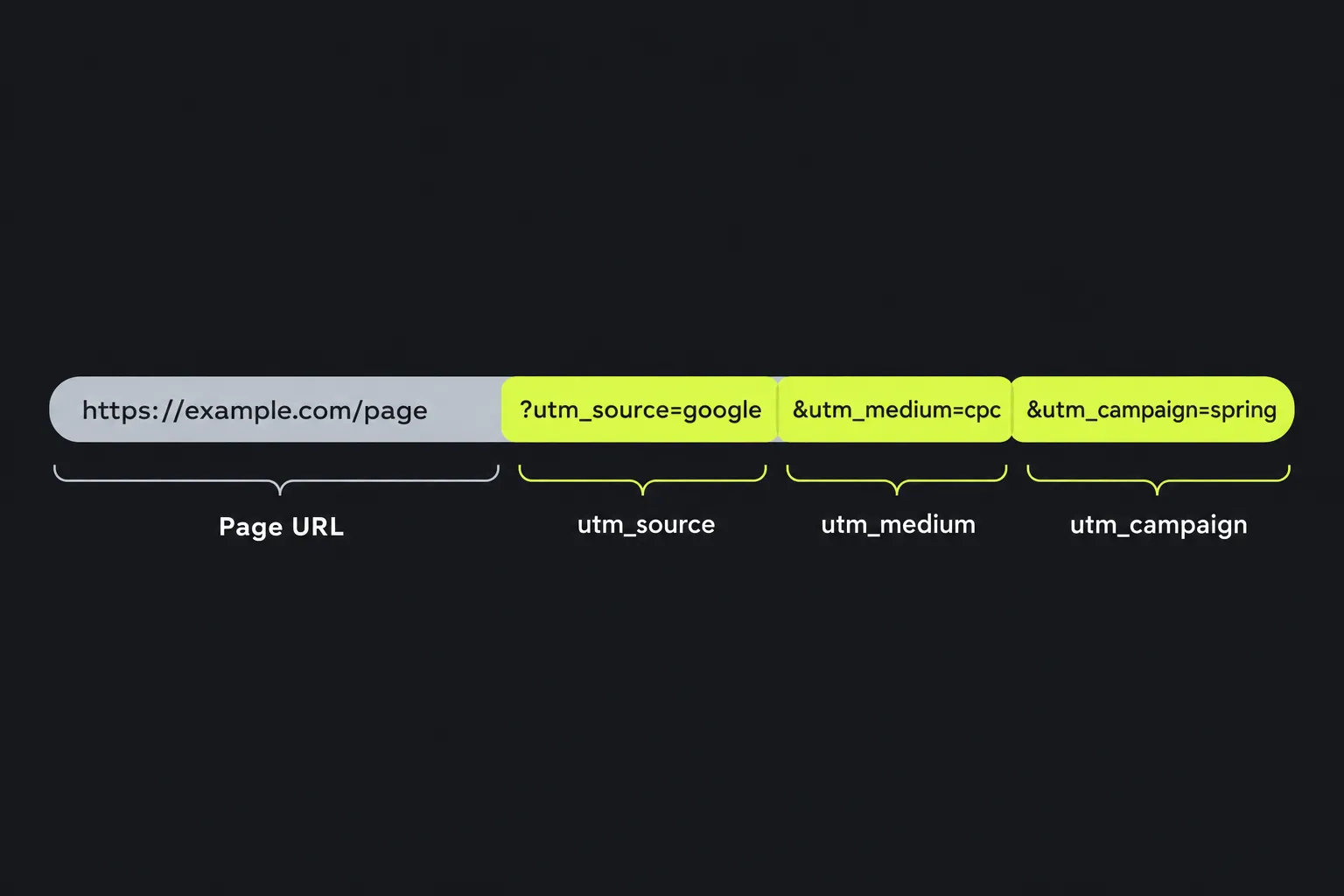
Campaign tagging works by adding named query parameters after the destination URL. UTM stands for Urchin Tracking Module, the naming convention behind parameters such as utm_source and utm_campaign.
A question mark introduces a new query when the destination URL has no existing query. Additional parameters are joined with ampersands. A typical structure looks like this.
https://example.com/page?utm_source=source&utm_medium=medium&utm_campaign=campaign
The destination page is identified by the URL's scheme, host, and path. A query follows a question mark and may contain UTM name-value pairs as well as other data. An optional fragment begins with a number sign. Parameter order generally does not change their meaning, although using the same order across links makes manual review easier.
After someone clicks the link, campaign values commonly appear in an analytics acquisition or campaign report. Exact report names depend on the analytics platform and its configuration. The parameters are also visible in the URL itself, including in a browser address bar, a recipient's app if it displays the full link, or the URL of a payment page used as the destination.
What should I enter in each UTM link generator field?
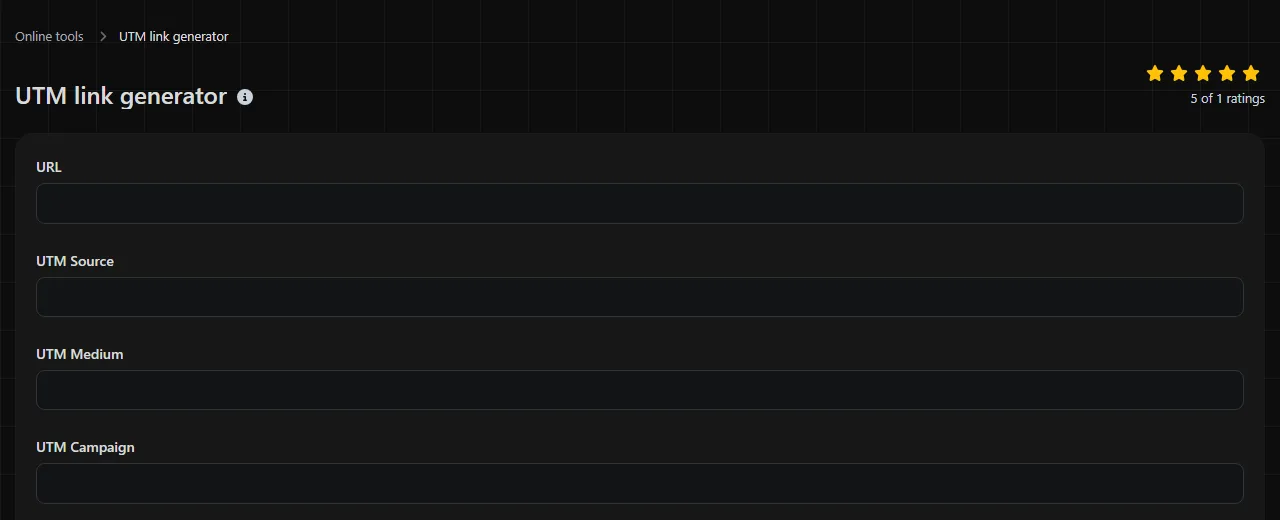
Enter values that identify where the click came from, how the link was distributed, and which campaign or variation produced it. The five fields correspond to established UTM parameter names.
| Form field | URL parameter | What to enter | Example |
|---|---|---|---|
| UTM Source | utm_source | The specific platform, publisher, newsletter, or referring source. | |
| UTM Medium | utm_medium | The channel or distribution method used for the link. | paid_social |
| UTM Campaign | utm_campaign | The shared name for the promotion, launch, event, or initiative. | fall_budget_webinar |
| UTM Content | utm_content | A label that distinguishes links or creative variations within the same campaign. | video_demo |
| UTM Term | utm_term | A paid search keyword or another planned targeting label. | small_business_budgeting |
Source and medium answer different questions. For example, linkedin identifies the source, while paid_social identifies the type of traffic. Avoid putting the platform name in both fields because that makes channel-level reporting harder to compare.
Campaign content is useful when a page contains multiple tracked links or when an ad set has several creative versions. Campaign term is commonly associated with paid search keywords, but a reporting team may define another controlled use for it. Document that decision so the field does not acquire several conflicting meanings.
A worked webinar promotion link
Suppose an accounting company is promoting a fall webinar through a paid LinkedIn video. The destination and field values are written below as plain text.
Destination URL: https://example.com/resources/budget-template
UTM Source: linkedin
UTM Medium: paid_social
UTM Campaign: fall_budget_webinar
UTM Content: video_demo
UTM Term: small_business_budgeting
The composed link is:
https://example.com/resources/budget-template?utm_source=linkedin&utm_medium=paid_social&utm_campaign=fall_budget_webinar&utm_content=video_demo&utm_term=small_business_budgeting
When a person follows this link, the destination receives the UTM values as URL query parameters. An analytics system must be installed and configured to record them. Generating the link alone does not create a report or guarantee that every visit will be recorded.
How can I keep campaign reports clean?
Keep campaign reports clean by applying one documented naming system before links are published. Analytics platforms often treat differences in capitalization, punctuation, and spelling as different values.
- Use lowercase values, such as newsletter rather than mixing Newsletter, NEWSLETTER, and newsletter.
- Avoid literal spaces. Choose one separator, commonly an underscore or hyphen, and use it consistently.
- Use stable medium names. Do not alternate between email, e-mail, and email_marketing unless they intentionally describe separate channels.
- Give campaigns descriptive names that can still be understood months later. A label such as fall_budget_webinar is more useful than campaign_7.
- Reserve utm_content for meaningful variations, such as header_button, footer_link, or video_demo.
Numbers are valid in parameter values, but dates should follow one consistent pattern. A sortable form such as 2026_09 avoids ambiguity between U.S. and international date conventions.
Spaces, punctuation, accented letters, and non-Latin characters may require percent-encoding to form a valid URL. For example, a space can appear as %20 or, under common query encoding rules, a plus sign. Because encoding and reporting behavior can vary by system, simple lowercase ASCII labels are often easier to audit. Very long values can also make links awkward to copy, review, or use in platforms with URL-length restrictions.
What can go wrong with a tagged link?
Tagged links can have a malformed destination or inconsistent campaign labels. A click test can help detect problems before publication. Four mistakes deserve a final check.
- Using the wrong separator. Start a new query string with a question mark, but use an ampersand if the destination already contains parameters.
- Placing parameters after a fragment. In a URL with a section fragment such as #pricing, the query should come before the fragment.
- Creating duplicate parameter names. A URL containing two utm_source values is ambiguous, and analytics systems may not interpret it consistently.
- Publishing mixed naming styles. Values such as Paid-Social and paid_social can split one channel across separate report rows.
UTM values are visible to anyone who receives or clicks the link. Do not place customer names, email addresses, account numbers, internal notes, or confidential targeting details in them.
Maintaining consistent UTM values across many links can become difficult, depending on the team and workflow. For larger programs, a governed spreadsheet, campaign management system, or scripted process can enforce approved values and reduce duplicate naming.
Questions people ask about UTM tracking
Do UTM parameters affect search rankings?
UTM parameters are intended for measurement rather than ranking. Search engines may discover tagged and untagged versions of the same page, so site owners commonly use canonical URL signals and avoid publishing unnecessary tagged versions as primary website links.
Should I use UTM links for navigation inside my own website?
Usually no. Internal UTM links can replace or distort the original acquisition information in some analytics setups. Use event tracking or another internal measurement method when you need to compare navigation elements on the same site.
Can I change the campaign values after a link has been published?
You can create a new link with revised values, but existing links retain their original UTM parameter values and may continue contributing to historical campaign reporting. Keep the old labels documented because clicks from saved emails, posts, or bookmarks may continue to appear under them.
Do UTM links require Google Analytics?
No. UTM parameters are ordinary URL query parameters, and other analytics systems can read them if those systems support or are configured for UTM attribution. Check the platform's field mapping before launching a campaign.
Can browser privacy tools block UTM reporting?
Some browsers, extensions, apps, or redirects may remove tracking parameters or prevent analytics requests from being sent. A correctly formatted UTM link therefore does not guarantee a recorded visit. Before publishing, open the final destination, confirm that it loads correctly, and verify the campaign data in the analytics setup you actually use.
Popular tools
Create a WhatsApp chat link from a phone number, with an optional prefilled message.